Selected Poems by John Balaban

Selected Poems by John Balaban

Anna Akhmatova Spends the Night on Miami Beach

Well, her book, anyway. The Kunitz volume
left lying on a bench, the pages
a bit puffy by morning, flushed with dew,
riffled by sea breeze, scratchy with sand
--the paperback with the 1930's photo
with her in spangled caftan, the back cover
calling her "star of the St. Petersburg circle
of Pasternak, Mandelstam, and Blok,
surviving the Revolution and two World Wars."

So she'd been through worse...
the months outside Lefortovo prison
waiting for a son who was already dead, watching
women stagger and reel with news of executions,
one mother asking, "Can you write about this?"
Akhmatova thought, then answered, "Yes."

If music lured her off the sandy bench
to the clubs where men were kissing
that wouldn't have bothered her much
nor the vamps sashaying in leather.
Decadence amid art deco fit nicely
with her black dress, chopped hair, Chanel cap.
What killed her was the talk, the empty eyes,
which made her long for the one person in ten thousand
who could say her name in Russian,
who could take her home, giving her a place
between Auden and Apollinaire
to whom she could describe her night's excursion
amid the loud hilarities, the trivial hungers
at the end of the American century.

For the Missing in Action

Hazed with harvest dust and heat
the air swam with flying husks
as men whacked rice sheaves into bins
and all across the sunstruck fields
red flags hung from bamboo poles.
Beyond the last treeline on the horizon
beyond the coconut palms and eucalyptus
out in the moon zone puckered by bombs
the dead earth where no one ventures,
the boys found it, foolish boys
riding their buffaloes in craterlands
where at night bombs thump and ghosts howl.
A green patch on the raw earth.
And now they've led the farmers here,
the kerchiefed women in baggy pants,
the men with sickles and flails, children
herding ducks with switches--all
staring from a crater berm; silent:
In that dead place the weeds had formed a man
where someone died and fertilized the earth, with flesh
and blood, with tears, with longing for loved ones.
No scrap remained; not even a buckle
survived the monsoons, just a green creature,
a viny man, supine, with posies for eyes,
butterflies for buttons, a lily for a tongue.
Now when huddled asleep together
the farmers hear a rustly footfall
as the leaf-man rises and stumbles to them.

Passing Through Albuquerque

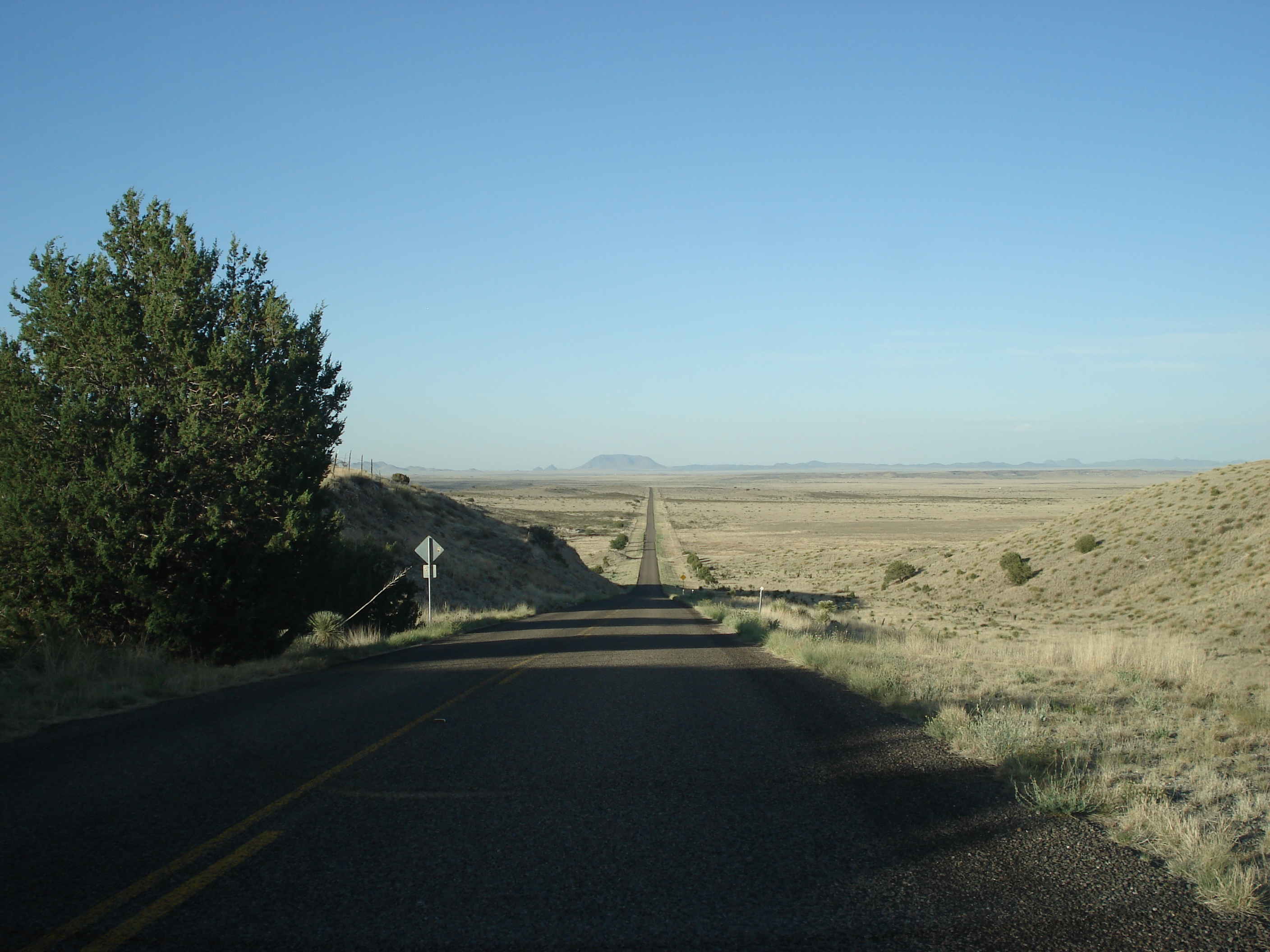
At dusk, by the irrigation ditch
gurgling past backyards near the highway,
locusts raise a maze of calls in cottonwoods.

A Spanish girl in a white party dress
strolls the levee by the muddy water
where her small sister plunks in stones.

Beyond a low adobe wall and a wrecked car
men are pitching horseshoes in a dusty lot.
Someone shouts as he clangs in a ringer.

Big winds buffet in ahead of a storm,
rocking the immense trees and whipping up
clouds of dust, wild leaves, and cottonwool.

In the moment when the locusts pause and the girl
presses her up-fluttering dress to her bony knees
you can hear a banjo, guitar, and fiddle

playing "The Mississippi Sawyer" inside a shack.
Moments like that, you can love this country.

Words for My Daughter

About eight of us were nailing up forts
in the mulberry grove behind Reds' house
when his mother started screeching and
all of us froze except Reds--fourteen, huge
as a hippo--who sprang out of the tree so fast
the branch nearly bobbed me off. So fast,
he hit the ground running, hammer in hand,
and seconds after he got in the house
we heard thumps like someone beating a tire
off a rim    his dad's howls    the screen door
banging open    Saw    Reds barreling out
through the tall weeds towards the highway
the father stumbling after his fat son
who never looked back across the thick swale
of teasel and black-eyed Susans until it was safe
to yell fuck you at the skinny drunk
stamping around barefoot and holding his ribs.

Another time, the Connelly kid came home to find
his alcoholic mother getting raped by the milkman.
Bobby broke a milk bottle and jabbed the guy
humping on his mom. I think it really happened
because none of us would loosely mention that
wraith of a woman who slippered around her house
and never talked to anyone, not even her kids.
Once a girl ran past my porch
with a dart in her back, her open mouth
pumping like a guppy's, her eyes wild.
Later that summer, or maybe the next,
the kids hung her brother from an oak.
Before they hoisted him, yowling and heavy
on the clothesline, they made him claw the creekbank
and eat worms. I don't know why his neck didn't snap.

Reds had another nickname you couldn't say
or he'd beat you up: "Honeybun."
His dad called him that when Reds was little.

* * *

So, these were my playmates. I love them still
for their justice and valor and desperate loves
twisted in shapes of hammer and shard.
I want you to know about their pain
and about the pain they could loose on others.
If you're reading this, I hope you will think,
Well, my dad had it rough as a kid, so what?
If you're reading this, you can read the news
and you know that children suffer worse.

* * *

Worse for me is a cloud of memories
still drifting off the South China Sea,
like the 9-year-old boy, naked and lacerated,
thrashing in his pee on a steel operating table
and yelling "Dau. Dau," while I, trying to translate
in the mayhem of Tet for surgeons who didn't know
who this boy was or what happened to him, kept asking
"Where? Where's the pain?" until a surgeon
said "Forget it. His ears are blown."

I remember your first Hallowe'en
when I held you on my chest and rocked you,
so small your toes didn't touch my lap
as I smelled your fragrant peony head
and cried because I was so happy and because
I heard, in no metaphorical way, the awful chorus
of Soeur Anicet's orphans writhing in their cribs.
Then the doorbell rang and a tiny Green Beret
was saying trick-or-treat and I thought oh oh
but remembered it was Hallowe'en and where I was.
I smiled at the evil midget, his map-light and night
paint, his toy knife for slitting throats, said,
"How ya doin', soldier?" and, still holding you asleep
in my arms, gave him a Mars Bar. To his father
waiting outside in fatigues I hissed, "You, shit,"
and saw us, child, in a pose I know too well.

I want you to know the worst and be free from it.
I want you to know the worst and still find good.
Day by day, as you play nearby or laugh
with the ladies at Peoples Bank as we go around town
and I find myself beaming like a fool,
I suspect I am here less for your protection
than you are here for mine, as if you were sent
to call me back into our helpless tribe.